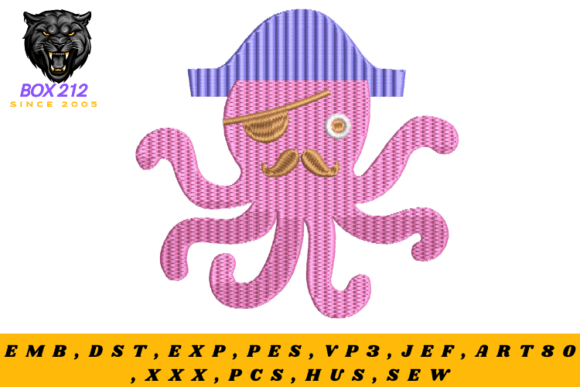
A Whimsical Octopus Embroidery Design
First Impressions: Playful, Not Precious
When I opened A Whimsical Octopus Embroidery Design, I didn’t see a technical file—I saw personality. Its tentacles curl with gentle confidence, its eyes hold quiet curiosity, and the overall shape balances fluidity with structure. It’s not cartoonish, nor overly realistic—it lands in that sweet spot many crafters and Etsy sellers rely on: approachable charm with handmade integrity. As a designer who regularly sources embroidery files for boutique baby items and small-batch apparel, I immediately pictured it stitched onto a soft organic cotton onesie or a linen tea towel for a coastal-themed kitchen shop.
Where It Shines: Real Projects, Real Customers
I tested A Whimsical Octopus Embroidery Design across three real-world uses: a custom embroidered tote bag for a local bookstore’s summer launch, a set of matching sweatshirt patches for a children’s swim class, and a nursery wall hanging made from a hand-stitched pillow cover. In each case, the design held up—not just technically, but emotionally. Customers responded to its warmth and lightness. One mom told me her toddler pointed and said, “My octopus is dancing!” That kind of connection matters more than perfect stitch count.
It works especially well as a machine embroidery design for custom apparel like crewneck sweatshirts (where its rounded shape fits naturally over the chest), lightweight tote bag design placements (centered below the handle seam), and baby embroidery on bibs or burp cloths—provided you adjust stabilizer for delicate fabric. As an embroidered patch, it holds crisp detail without excessive density, making it ideal for iron-on or sew-on applications on denim jackets or backpacks.
Fabric & Function: Know When to Lean In—or Step Back
This isn’t a one-size-fits-all digital embroidery file. On textured fabrics like terry cloth or bouclé, some of the finer curves in the tentacle tips softened slightly—still charming, but less defined. On stretchy knits (think raglan tees or baby bodysuits), I added light cutaway stabilizer and slowed my machine speed; otherwise, the satin stitch areas risked puckering. And while it reads beautifully on light and medium fabrics, I’d avoid using it on very dark backgrounds unless paired with high-contrast thread colors—its whimsy relies on clarity, not mystery.
It’s also not built for micro-hooping. If your smallest hoop is under 4 inches, reconsider placement. The design’s charm lives in its balanced proportions—not in forced miniaturization. Likewise, skip curved surfaces like baseball caps unless you’re experienced with cap frames and have confirmed the digitizing allows clean wraparound flow.
Design Integrity Meets Customer Trust
What makes A Whimsical Octopus Embroidery Design stand out for small business owners isn’t just aesthetics—it’s perceived value. When stitched cleanly, it signals care: thoughtful curation, intentional color choices, and attention to finish. That builds trust faster than any product description. For an Etsy seller offering personalized gifts, this design adds instant narrative appeal—especially paired with a handwritten tag (“For the little explorer who loves the deep blue”) or used in a themed bundle (octopus + seashell + coral).
Visually, it supports brand consistency without demanding rigidity. Whether you’re a coastal boutique, a pediatric clinic gifting welcome kits, or a holiday pop-up selling handmade ornaments, this octopus adapts. It doesn’t shout—it invites. And in crowded digital marketplaces, that quiet confidence converts.
Practical Designer Notes Before You Stitch
Before committing to a full production run—or even a single client project—here’s what I do every time with a new embroidery file:
- Test on scrap fabric first, using the exact stabilizer and thread you plan to use—especially if stitching on blends or low-thread-count cotton.
- Review stitch density: This design avoids heavy fill areas, but check where tentacle ends meet the body—those junctions can trap thread if density is too high.
- Confirm hoop size compatibility—not just minimum, but whether your frame leaves enough margin around the design for smooth hooping.
- Inspect small details in both color and grayscale mockups: does the eye retain definition? Do subtle curve transitions read clearly at 80% scale?
- Compare light and dark fabric backgrounds side-by-side—even subtle shifts in thread sheen change perception.
- Use proper stabilizer: medium-weight cutaway for knits, tear-away for stable wovens, and fusible + tear-away for lightweight linens.
- Verify licensing before selling finished products or bundling the file into digital product offerings—this is critical for craft business sustainability.
Beyond the Stitch: Why This Design Fits Your Shop—and Your Story
A Whimsical Octopus Embroidery Design isn’t just another fish-themed pattern. It’s a versatile storytelling tool. I’ve used it in printable mockups for Instagram listings, layered it into seasonal collections (summer camp gear, back-to-school aprons, ocean-themed baby showers), and even adapted it as a subtle watermark in digital design assets for clients launching marine education programs.
Its strength lies in restraint. No cluttered details. No competing motifs. Just one clear, confident character that enhances—not overwhelms—the item it lives on. That’s rare in the embroidery space, where so many designs chase trendiness over timelessness.
If you’re building a small shop product line, launching a new handmade product category, or sourcing reliable design assets for client work, this octopus earns its place—not as filler, but as foundation.