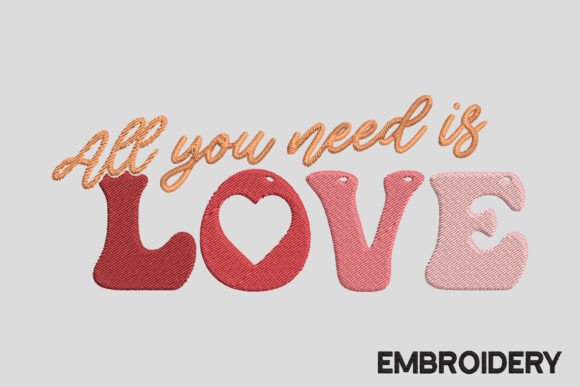
All You Need is Love Embroidery Design
First Impressions: Soft, Timeless, and Thoughtfully Balanced
When I opened All You Need is Love Embroidery Design, I didn’t see just another Valentine’s motif—I saw a quiet confidence in its composition. The phrase flows in a gentle arc, not rigidly centered but thoughtfully weighted, with subtle heart accents woven into the letterforms rather than tacked on as afterthoughts. It’s romantic without being saccharine, classic without feeling dated. As a designer who’s stitched hundreds of holiday-themed machine embroidery designs, I immediately recognized this one’s strength: it leans into warmth and sincerity instead of cliché. That makes it ideal for handmade products where emotional resonance matters—think personalized baby onesies, boutique aprons for bakeries, or linen tea towels gifted at bridal showers.
A Real-World Test: Stitching It on a Linen-Cotton Tote Bag
Last week, I used All You Need is Love Embroidery Design on a natural linen-cotton tote for a local artisan pop-up. Why that fabric? Because it’s common in small shop merchandise—and unforgiving. Linen shifts under the needle, and low thread count means fill stitches can sink or show through. I hooped it with medium-weight cutaway stabilizer, tested on scrap first, and adjusted tension slightly to keep satin stitch edges crisp. The result held up beautifully: clean curves, legible lettering even at 3.5 inches wide, and zero puckering. Customers paused at the booth—not just because of the bag, but because the embroidery looked *intentional*, like part of the product’s identity, not an add-on. That’s the difference between a decoration and a design asset.
Where It Shines (and Where It Asks for Extra Care)
All You Need is Love Embroidery Design works exceptionally well for:
- Custom apparel—especially sweatshirts and lightweight knits, where its open layout avoids heavy density;
- Embroidered patches—the balanced spacing allows clean edge finishing and easy iron-on backing;
- Baby embroidery—soft curves and no sharp corners make it safe and soothing on onesies and burp cloths;
- Holiday embroidery—it reads clearly at smaller sizes (2.75–4 inches), so it fits neatly on pillow covers or kitchen towels without crowding;
- Commercial embroidery—consistent stitch direction and moderate fill areas mean reliable repeat performance across machines.
But here’s where attention matters:
- Thin or stretchy fabric: Use tear-away + topping on jersey or rayon blends—those delicate “e” counters and curved stems need support to stay defined.
- Dark fabric: Test thread colors carefully. A soft rose or charcoal gray often reads more elegantly than stark white, especially in satin stitch areas.
- Curved surfaces: On caps or curved pillow fronts, reposition the design slightly higher than center—the arc naturally follows the curve better that way.
- Frequent-wash items: Confirm stitch density isn’t overly aggressive; dense fills on baby items or tea towels can stiffen fabric over time.
Design Judgment: Beyond Aesthetics, Into Trust and Value
As an Etsy seller and craft business owner myself, I judge embroidery files not just by how they look stitched—but by how they affect buyer perception. All You Need is Love Embroidery Design elevates perceived value because it doesn’t shout. Its restraint signals craftsmanship. When customers see it on a handmade apron or a custom sweatshirt, they don’t think “Valentine S Day sale item”—they think “this person chose something meaningful.” That builds trust faster than any tagline. It also supports brand consistency: pair it with neutral thread palettes and natural fibers, and it becomes part of a cohesive visual language—not just seasonal decoration.
Practical Designer Notes Before You Stitch
Before adding All You Need is Love Embroidery Design to your next project, take these steps:
- Test on scrap fabric—especially if using textured weaves, fleece, or blends;
- Check thread color contrast in both natural and artificial light—some creams read warm indoors but cool under LED;
- Review stitch density in the file preview: look for tight clusters around inner curves or letter junctions;
- Confirm hoop size compatibility—if your smallest hoop is 4x4”, verify the design fits comfortably with ¼” margin;
- Inspect small details—like the negative space inside the “o” or the taper of the “v”—they’re often where stitching breaks down;
- Try black-and-white mockups to assess readability on dark or patterned backgrounds;
- Use proper stabilizer—cutaway for knits, tear-away for stable wovens, and topping for napped fabrics;
- Verify licensing before selling finished items or listing the digital embroidery file—commercial use rights aren’t automatic.
Final Thought: A Design That Earns Its Place
All You Need is Love Embroidery Design isn’t flashy—but it doesn’t need to be. In a market flooded with overworked motifs and pixelated hearts, its clarity, balance, and quiet charm make it a keeper. It performs well across real-world substrates, scales gracefully, and carries emotional weight without leaning on trend-driven gimmicks. Whether you’re stitching a single personalized gift or building a collection of small shop products, this embroidery file earns its spot in your design assets—not because it’s easy, but because it’s thoughtful. And in handmade work, that’s the highest compliment of all.