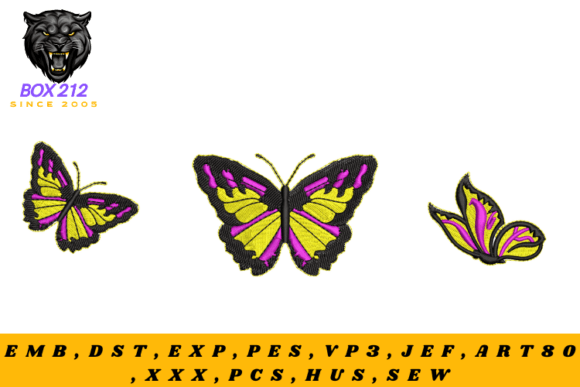
Butterflies Digital Embroidery Design
A Delicate, Whimsical Statement for Boutique Apparel
As an embroidery designer who’s developed collections for small clothing brands and Etsy sellers over the past decade, my first impression of the Butterflies Digital Embroidery Design was immediate: it’s graceful without being fussy, intricate without sacrificing stitch stability, and quietly feminine without leaning into cliché. The visual personality leans toward soft elegance—think fluttering wings with fine line work and subtle layering—not cartoonish or overly symmetrical. It feels premium, yes, but also wearable and seasonless. That balance is rare in the Bugs category, where many machine embroidery designs default to bold or playful. This one breathes. It invites slow looking. And that matters when you’re building a boutique brand where every stitch contributes to perceived value.
How It Performs Across Real Apparel Projects
I tested the Butterflies Digital Embroidery Design across several garment types I regularly use for client collections: neutral heather sweatshirts, blush-toned hoodies, charcoal French terry, lightweight cotton tees, and even a structured denim jacket. On a relaxed-fit hoodie chest placement, the design held its shape beautifully—no distortion, no puckering—especially when paired with medium-weight cutaway stabilizer. Its moderate stitch density allows breathability while maintaining definition, which is critical for sweatshirt embroidery where fabric thickness can mute detail.
For sleeve accents on oversized sweatshirts, the butterflies read clearly at 3–4 inches wide—ideal for subtle branding without overwhelming proportion. As a back design on a cropped hoodie? Stunning. The motifs flow organically across the curve, especially when arranged in a gentle arc rather than a rigid horizontal line. On t-shirts, I resized it slightly smaller (under 3.5”) and used tear-away + light cutaway combo; the result was crisp, lightweight, and perfectly suited for lifestyle product photos—soft lighting, natural folds, zero stiffness.
It also translated well to non-apparel surfaces: a linen-cotton tote bag showed off the wing texture beautifully, and as part of a seasonal capsule (think cozy knits and wool-blend cardigans), the design added just enough whimsy without clashing with rich textures. For commercial embroidery, this versatility means fewer design swaps across SKUs—same file, multiple applications.
Where to Use It Thoughtfully
The Butterflies Digital Embroidery Design shines—but it’s not universally forgiving. On highly stretchy fabrics like ribbed knit cuffs or curved hemlines, I recommend testing placement on scrap first and considering basting stitches before hooping. Fleece and thick French terry require extra stabilizer attention: too little, and wing edges blur; too much, and the design feels stiff against skin. Dark garments demand careful thread color selection—matte pastel threads (like heather lavender or stone gray) often read more elegantly than bright whites, which can look harsh under studio lighting.
Small chest placements (<3”) work best when the butterfly motif is centered cleanly—not cropped mid-wing—and when hoop size allows full registration. Always confirm the hoop size listed on Creative Fabrica before digitizing alternate sizes. Also note: the delicate antennae and wing veins mean dense stitch areas need precise tension calibration. If your machine tends toward skipped stitches on fine details, run a test on similar garment fabric before committing to a full batch.
Impact on Brand Identity & Customer Trust
In my experience, customers don’t just buy embroidered apparel—they buy intention. A thoughtfully placed Butterflies Digital Embroidery Design signals care: in execution, in material choice, in aesthetic cohesion. For small shop owners and Etsy sellers, that translates directly to buyer trust. When a customer sees consistent, refined embroidery across your listings—whether on a sweatshirt, tote, or denim jacket—they begin to associate your brand with quiet confidence, not craft-store randomness.
This design supports visual consistency without demanding uniformity. You can rotate thread colors across pieces (sage green on oatmeal, dusty rose on cream, charcoal on black) and still maintain instant recognition. That flexibility strengthens brand identity while keeping production agile. Plus, because it reads equally well in printable mockups and real-life social media graphics, it scales effortlessly from Instagram carousels to packaging tags.
Practical Designer Notes Before You Stitch
- Always test on scrap fabric—especially if using new stabilizer combos or unfamiliar garment blanks.
- Review thread color contrast carefully: what looks soft on screen may vanish on dark fleece or get lost in textured weaves.
- Confirm hoop size and format compatibility before importing into your embroidery software—Creative Fabrica lists these, but double-check against your machine’s limits.
- Inspect stitch density visually in your editing software: look for tight clusters near wing tips or layered bodies that might benefit from slight underlay adjustment.
- Compare placement options on a physical garment mockup—not just digital preview—to assess drape, scale, and movement.
- Check Creative Fabrica product details and licensing thoroughly before selling finished apparel—some digital embroidery files include commercial use terms, others are for personal projects only.
Final Thoughts for the Intentional Creator
The Butterflies Digital Embroidery Design isn’t just another Creative Fabrica embroidery download. It’s a quiet tool for differentiation—ideal for custom apparel makers who want their handmade product to feel both elevated and approachable. It works for the small shop product that needs to stand out in a crowded Etsy search, the boutique brand launching its first hoodie collection, or the embroidery shop adding seasonal charm to existing inventory. Its strength lies in restraint: no excessive fill, no forced trendiness, just thoughtful, graceful execution. In a market flooded with loud, fast, and generic, that kind of intentionality is rare—and valuable.