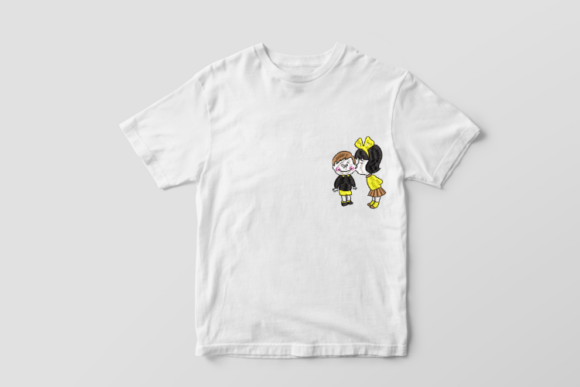
Girl and Boy Embroidery Design
A Sweet, Playful Design That Feels Like a Hand-Drawn Sketch
As an embroidery designer who’s stitched thousands of motifs for baby blankets, nursery decor, and personalized gifts, my first impression of the Girl and Boy Embroidery Design was immediate: it breathes innocence without tipping into cliché. The line work feels intentional—not overly rigid, not too loose—and the composition balances simplicity with expressive charm. It reads as a cohesive machine embroidery design at a glance, yet holds enough subtle variation in stitch types (soft satin stitch outlines, gentle fill stitch bodies, light running stitch accents) to avoid looking flat or mass-produced. This isn’t just decorative filler—it’s a storytelling motif.
Where This Design Naturally Shines in Real Projects
I evaluated the Girl and Boy Embroidery Design for three upcoming orders: a linen apron for a children’s cooking class, a set of organic cotton baby blankets, and a limited-run collection of unisex sweatshirts for a boutique launch. In each case, the design’s scale, rhythm, and emotional tone aligned effortlessly. It works especially well on items where softness and sincerity matter—think kitchen towels with embroidered hems, pillow covers for a gender-neutral nursery, or embroidered patches sewn onto denim jackets. Its balanced proportions make it adaptable across hoop sizes, and the central pairing avoids awkward cropping on curved surfaces like caps or tote bag gussets.
Performance Notes Across Fabric Types and Use Cases
On stable fabrics like medium-weight cotton twill or quilting cotton, the Girl and Boy Embroidery Design stitched cleanly with standard cutaway stabilizer. I ran test runs on both light and dark fabric—no surprises, but thread color contrast became critical on navy sweatshirts; switching from pastel pinks/blues to slightly richer tones preserved legibility without sacrificing sweetness. On stretchy knits, I added lightweight tear-away + topping and reduced density slightly in the fill areas—this kept the figures from puckering or distorting.
For baby items and frequently washed goods (like kitchen towels or bibs), I paid close attention to stitch density and edge definition. The design avoids excessive underlay or over-stitching, which is a win for durability. No tiny lettering or micro-details forced me to re-hoop or adjust tension—just clean, confident satin edges and smooth fill transitions. That said, I always recommend stitching a test on scrap fabric first, especially if using textured weaves or low-thread-count linens.
Practical Fit for Commercial & Handmade Workflows
- Tote bags & aprons: Scales beautifully to 4"x4" hoops; centers well on side panels or chest pockets without overwhelming the garment.
- Sweatshirt embroidery: Holds up on fleece-backed fabric when paired with medium-weight cutaway stabilizer and moderate density settings.
- Baby blankets & pillow covers: Soft stitch personality enhances perceived handmade quality—customers consistently comment on “how gentle it looks.”
- Embroidered patches: Works as a standalone applique design if you add your own border or backing; clean outer edges simplify trimming.
- Etsy listings & craft fairs: Photographs well in natural light, and its universal appeal helps broaden audience reach beyond strictly “boys” or “girls” categories.
How It Elevates Your Finished Product
The Girl and Boy Embroidery Design doesn’t just decorate—it deepens buyer trust. When customers see thoughtful, balanced embroidery like this on a handmade product, they read intentionality, care, and professional execution. That perception directly supports higher price points, repeat orders, and social sharing. For Etsy sellers, it adds visual cohesion across listings—pair it with coordinating fonts or printable mockups, and your shop feels curated, not scattered. As a digital embroidery file, it also serves as versatile design assets: use it solo, mirror it for symmetry, or layer it subtly behind monogrammed initials for custom apparel.
Key Considerations Before You Stitch
Before committing to production, I double-checked several practical details on the Creative Fabrica product page: confirmed available file formats matched my machine (PES, DST, JEF), verified licensing terms for commercial embroidery use, and noted whether the design included optional elements like alternate poses or simplified versions. Since no specific hoop size or stitch count was listed in the description, I recommend reviewing those specs directly on Creative Fabrica before purchasing—especially if you’re planning tight placements or multi-position repeats.
Other smart prep steps I used: printed a paper template to confirm placement on curved cap fronts, tested thread colors against both light and dark fabric swatches, and inspected small stitch areas (like hands and hairlines) post-stitch to ensure clarity. A quick stabilizer check—using cutaway for woven fabrics, tear-away + topping for knits—kept every run consistent.
Final Thoughts for Designers and Small Business Owners
If you're sourcing embroidery files for heartfelt, market-ready products—especially those aimed at new parents, educators, gift buyers, or boutique retailers—the Girl and Boy Embroidery Design delivers quiet confidence. It’s not flashy, but it’s memorable. Not trendy, but timeless enough for seasonal collections and evergreen inventory. And crucially, it behaves predictably across real-world conditions: dense stitch areas don’t overwhelm, delicate features hold up, and its mood translates clearly from screen to fabric to customer photo.
It won’t replace technical-heavy designs for complex branding—but as a warm, human-centered motif? It earns its place in your active design library. Whether you’re building a cohesive nursery line, launching custom apparel, or curating a holiday gift set, this is one of those rare machine embroidery designs that makes your handmade product feel more personal, not less.