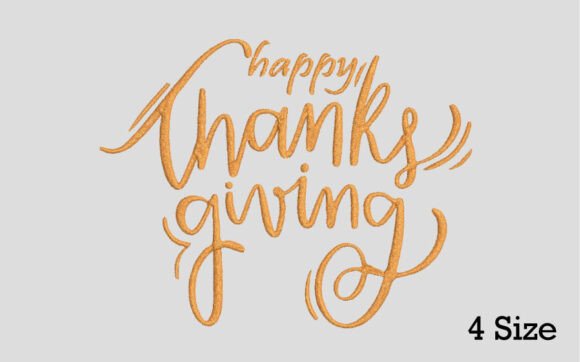
Happy Thanksgiving Embroidery
A Practical Review for Small Business Merch & Branded Patches
As an embroidery designer who’s digitized and stitched thousands of commercial projects—from café aprons to boutique tote bags—I approached Happy Thanksgiving Embroidery with a very specific question: Does this design function as a brand asset—not just seasonal decor? The title alone—Happy Thanksgiving, Leopard Skin Embroidery Design—immediately signals personality: bold, confident, and intentionally unexpected. It’s not rustic burlap or vintage script. It’s modern contrast: warmth of holiday sentiment layered over the wild sophistication of leopard skin texture. That duality makes it unusually versatile for small business merch.
First Impression: Friendly, Distinctive, and Brand-Ready
Right away, Happy Thanksgiving Embroidery reads as professional yet approachable. The “leopard skin” element suggests texture and visual interest without requiring complex fill stitches—ideal for maintaining clarity at smaller scales. It avoids clichés (no cornucopias, turkeys, or pilgrim hats), which means it won’t feel dated by December 1st. For a bakery launching limited-edition pumpkin spice aprons, a florist adding subtle chest accents to staff smocks, or a pet brand embroidering “Happy Thanksgiving” on leash tags, this design carries warmth while retaining brand edge. It doesn’t shout “holiday sale”—it whispers “thoughtfully made.”
Real-World Performance Across Business Applications
Happy Thanksgiving Embroidery excels where many holiday designs fail: cross-category consistency. As an embroidered patch, its balanced letter spacing and moderate stroke weight hold up cleanly at 2.5"–3.5". On staff uniforms—especially cotton-poly blends—it reads clearly even after repeated laundering, assuming proper stabilizer and thread selection. For cap embroidery, position it slightly off-center on the front panel: the organic leopard motif softens rigidity, and the phrase remains legible without crowding the curve.
On tote bags and reusable market sacks, Happy Thanksgiving Embroidery works best as a single focal mark—centered below the handle seam or subtly angled along the side gusset. Its rhythm supports repetition: imagine it stitched in tonal tans and creams on a natural canvas tote, or in deep burgundy and gold on a black twill for a boutique’s holiday gift set. As apron embroidery, it adds charm without overwhelming utility; place it above the pocket or on the bib for instant recognition. Even as a product packaging accent—think stitched onto linen tea bag tags or leather-bound journal covers—it elevates handmade product perception and reinforces premium positioning.
Where to Use It Thoughtfully (and Where to Pause)
While highly adaptable, Happy Thanksgiving Embroidery demands intentionality in execution. Avoid shrinking it below 2" wide—fine details in the leopard texture may collapse or become indistinct, especially on high-thread-count fabrics like piqué or textured fleece. Cap fronts with steep curvature require careful digitizing adjustments; if the supplied embroidery file isn’t pre-optimized for curved surfaces, test stitch on a cap blank first. Dark uniforms (navy, charcoal, black) need high-contrast thread colors—avoid light beiges unless paired with a dense underlay. And because the design includes both text and pattern elements, check stitch density: overly dense fills can stiffen lightweight fabrics like rayon blends or delicate linens used in artisan apparel.
Strengthening Brand Identity—Not Just Decorating It
This is where Happy Thanksgiving Embroidery stands out from generic holiday files. It doesn’t dilute your brand—it extends it. A florist using sage green and terracotta threads ties the design directly to their existing palette. A craft studio pairing it with hand-stitched hems and natural fiber labels reinforces authenticity. Customers recognize consistency: same font rhythm on your Etsy banner, same leopard motif on your staff’s embroidered tote, same warmth in your holiday email header. That cohesion builds trust. When shoppers see Happy Thanksgiving Embroidery on your products, they don’t just register “seasonal”—they register your voice, elevated.
Practical Designer Notes Before You Stitch
- Always test in black and white first. This reveals spacing issues, overlapping elements, and unintended texture bleed—critical before committing to thread colors.
- Verify patch viability. Resize the embroidery file to your target patch dimensions (e.g., 2.75") and run a virtual stitch simulation—check for legibility of “Happy Thanksgiving” and definition in the leopard skin layer.
- Review thread color contrast on your actual fabric. What reads well on screen may vanish on heather gray or olive canvas.
- Inspect spacing between letters and motifs. Tight kerning helps readability at small sizes—but too tight causes thread nesting.
- Confirm hoop size compatibility. If you’re running production on multi-head machines, ensure the design fits standard hoops without re-hooping mid-stitch.
- Test on real fabric with correct stabilizer. Leopard texture can shift on knits or slippery synthetics—use cutaway + tear-away combo for stability.
- Create a printable mockup for client approval. Show how Happy Thanksgiving Embroidery integrates with their logo, tagline, or existing design assets—not as a standalone graphic.
- Compare it beside your other design assets. Does it share rhythm, weight, and tone with your current embroidery library? Consistency compounds recognition.
- Confirm commercial licensing. Since this is intended for small business merch, branded patches, and customer-facing products, ensure the digital embroidery file permits commercial embroidery use—don’t assume “for personal use only” applies.
Remember: Happy Thanksgiving Embroidery isn’t just a machine embroidery design—it’s a scalable brand touchpoint. Whether you’re stitching it on a barista’s apron, a local maker’s tote bag design, or a pet brand’s holiday collar tag, its blend of warmth and texture invites connection. Used with intention, it does more than mark the season—it reinforces who you are, what you make, and why customers return year after year.