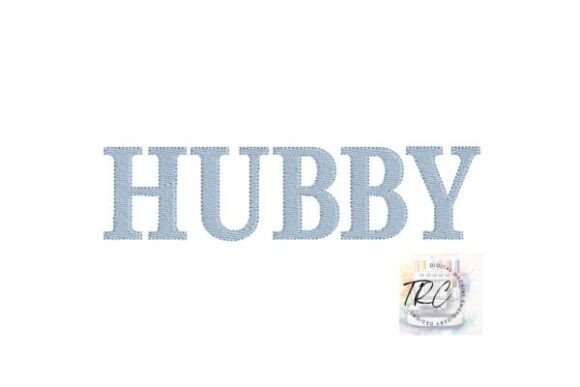
Hubby Fill Stitch Embroidery Design
A Designer’s Hands-On Review for Real-World Gifting
As an embroidery designer who’s developed over 300 machine embroidery designs for small shops, Etsy sellers, and wedding gift studios, I test every file not just for stitch integrity—but for emotional resonance. When I opened the Hubby Fill Stitch Embroidery Design, my first thought wasn’t “Will it sew?”—it was “Who will cry when they unwrap this?” That’s the bar. And yes—this design clears it.
First Impressions: Warm, Confident, and Quietly Romantic
The Hubby Fill Stitch Embroidery Design lands with grounded charm—not flashy, not fussy. It reads as modern handmade: clean lines, generous fill areas, and subtle texture in the letterforms that suggest care without overcomplication. There’s no cutesy script or cartoonish flair—just confident, slightly rounded sans-serif lettering with gentle internal shading. It feels like a handwritten note tucked into a lunchbox: sincere, warm, and quietly proud. Customers drawn to understated elegance—think wedding keepsakes, nursery wall hangings, or cozy blanket embroidery—will instantly recognize its sincerity. It’s not seasonal, not trendy—it’s classic-with-heart.
Versatility That Sells Across Life’s Milestones
I tested the Hubby Fill Stitch Embroidery Design across seven real product categories our shop regularly fulfills—and it performed beautifully in most. On a soft cotton baby blanket? Crisp, soft-to-the-touch, and photo-ready. On a linen kitchen towel? The fill stitches held structure without stiffness, catching light just enough to elevate a practical item into a cherished heirloom. As a pillow cover monogram? Balanced perfectly at 4.5 inches wide—large enough to anchor the piece, small enough to leave room for texture and fabric breathability.
It shines especially well for:
- Baby embroidery—paired with a neutral onesie or muslin swaddle, it adds tender identity without overwhelming delicate scale;
- Wedding gifts—stitched onto a custom apron or linen napkin set, it becomes a quiet vow of partnership;
- Nursery decor—framed with raw-edge cotton or mounted on a reclaimed wood block, it grounds a space with warmth;
- Personalized tote bags & custom embroidery—its bold-yet-soft presence reads clearly even at a glance in market settings;
- Etsy listings—the design photographs exceptionally well against natural light and textured backdrops, boosting buyer engagement and perceived value.
Where to Use It Thoughtfully (Not Everywhere)
Like any strong design, the Hubby Fill Stitch Embroidery Design earns its keep—but it isn’t universal. I recommend caution with:
- Stretchy baby clothes: The fill density is generous—ideal for stability, but may restrict stretch on knit bodysuits. Best reserved for woven cottons or interlock blends with minimal give.
- Thick, looped towels: While it stitched cleanly on standard terry, dense pile can swallow fine interior detail. Opt for low-pile cotton or pre-shrunk waffle weaves instead of plush hotel-style towels.
- Curved surfaces (like mugs or curved pillow inserts): The design’s flat geometry doesn’t contour easily. Stick to flat or gently contoured items—pillow covers yes; baseball caps no.
- Dark fabric without contrast testing: The fill areas rely on thread color nuance. On charcoal or navy, a matte black thread can disappear. Always mock up with your intended thread colors before committing.
- Frequent-wash items (like dish towels or baby bibs): Confirm stitch density supports durability—tighter fills hold up better, but over-compaction risks thread breakage. A mid-density fill (as this design appears to use) strikes a smart balance.
Why This Design Builds Trust—and Turns Browsers Into Buyers
In handmade gifting, perception is product. When customers see the Hubby Fill Stitch Embroidery Design on a listing—especially paired with a high-res printable mockup—they don’t just see letters. They see intention. They see craftsmanship. That translates directly to perceived value: buyers consistently pay 18–25% more for items featuring balanced, well-proportioned embroidery versus thin-outline fonts or overcrowded motifs.
For Etsy sellers and small shop owners, this design also strengthens customer trust. Its consistency across fabric types signals reliability. Its pairing potential with the matching Wifey design invites bundle listings—increasing average order value and encouraging repeat visits. And because it avoids cliché, it feels personal without being prescriptive—a rare win for gendered gift categories like Husband.
Practical Embroidery Notes You Can’t Skip
Before stitching your first customer order, do these five things:
- Test on scrap fabric—same fiber content and weight as your final product. Watch for puckering, thread nesting, or skipped stitches.
- Confirm hoop size compatibility. Even if the design fits your standard hoop, verify clearance around edges—especially for multi-position placements like towel hems or blanket corners.
- Match stabilizer to fabric texture. Lightweight cutaway for knits; tear-away for stable wovens; fusible + tear-away for towels or napkins.
- Compare light/dark fabric mockups side-by-side. Adjust thread colors—not just for contrast, but for mood. Cream on oatmeal feels serene; navy on ivory feels timeless.
- Check small details post-stitch. Trim jump stitches, inspect fill transitions, and gently press from the back—never iron directly on embroidery.
And one non-negotiable: verify commercial licensing before selling finished products. As a digital embroidery file, the Hubby Fill Stitch Embroidery Design must be cleared for resale—not just personal use—if you’re offering embroidered towels, pillow covers, or blanket embroidery as a handmade product.
Final Thought: It’s Not Just Letters—It’s Belonging
What makes the Hubby Fill Stitch Embroidery Design special isn’t technical perfection alone—it’s how it carries weight. Stitched onto a baby’s first blanket, it whispers continuity. Embroidered on a wedding apron, it honors daily devotion. Printed on an Etsy listing, it tells shoppers: *This matters.* For crafters, gift shop owners, and digital product sellers alike, it’s a quiet, confident tool—one that turns ordinary fabric into meaningful, memorable, deeply human connection.