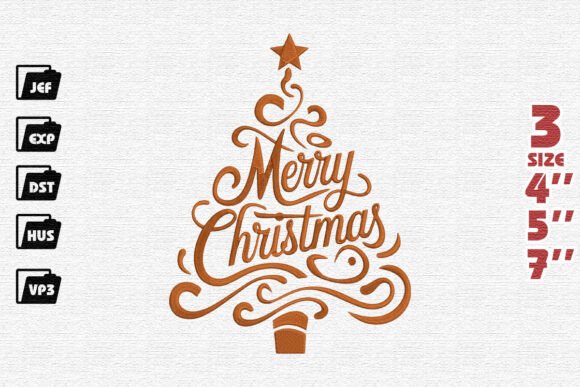
Merry Christmas Tree Embroidery Design
A Designer’s First Impression: Festive, Quirky, and Instantly Recognizable
As an embroidery designer who’s curated over 20 seasonal collections for Etsy sellers and small-batch apparel brands, my first glance at the Merry Christmas Tree Embroidery Design landed with a quiet smile — not just because it’s charming, but because it *works*. It strikes that rare balance: playful enough for kids’ sweatshirts and tote bags, yet refined enough for linen pillow covers and monogrammed kitchen towels. The mood is warm and inviting — cozy rather than kitschy, nostalgic without leaning into vintage clichés. There’s no heavy religious symbolism or overly literal nativity detail; instead, it leans into joyful abstraction: a stylized tree with subtle texture in the branches, balanced negative space, and a confident silhouette that reads clearly even at 3.5 inches tall. That makes it ideal for seasonal embroidery across diverse product types — from baby onesies to rustic aprons — without needing redesign or scaling gymnastics.
Real-World Holiday Selling Scenarios Where This Design Shines
This machine embroidery design thrives where emotional resonance meets practical execution. On Etsy seller listings, it performs especially well in gift bundles: pair it with a matching embroidered patch and a set of tea towels for “Holiday Hostess Ready” kits. At craft fairs, the Merry Christmas Tree Embroidery Design stands out on oversized tote bags and chunky knit pillow covers — its clean lines translate beautifully in person, not just in digital mockups. For limited-edition apparel drops, it layers seamlessly into family matching sets (think coordinating sweatshirt embroidery on adults and toddlers) and works equally well as a standalone motif on aprons or table linens. Social media previews pop with this design: its strong shape holds up in thumbnail feeds, and when used in printable mockups for Instagram carousels or holiday email campaigns, it reinforces brand consistency without demanding custom illustration work.
Where to Use It Strategically — and Where to Pause
While versatile, thoughtful placement matters. On thick terry cloth kitchen towels, use a medium-weight cutaway stabilizer and reduce stitch density slightly — dense fills can stiffen the fabric and mute the design’s lightness. Avoid placing it on highly stretchy garments (like ribbed cotton tees) without proper tear-away + cutaway combo stabilization — the tree’s clean outline can distort if the base fabric shifts mid-stitch. Dark fabrics demand careful thread color testing: what reads as cheerful gold on ivory may vanish on navy unless you opt for high-contrast metallics or matte metallic alternatives. And while it scales beautifully down to 2.75 inches for ornaments or baby bibs, skip using it below 2 inches — tiny lettering or fine branch details risk becoming indistinct or thread-heavy. Curved surfaces like caps? Possible — but confirm hoop size compatibility first. Always test on scrap fabric with your exact thread colors and stabilizer combo before committing to production runs.
How This Design Elevates Seasonal Appeal and Buyer Trust
Holiday shoppers don’t just buy products — they buy moments, memories, and meaning. The Merry Christmas Tree Embroidery Design taps directly into that. Its “fun and quirky accent” tone builds instant familiarity, making finished products feel personal and handmade — critical for handmade gift positioning. When customers see consistent, well-executed stitching across a shop’s holiday collection (e.g., matching pillow cover, towel, and embroidered patch), it signals professionalism and care — boosting customer trust during high-stakes shopping windows. Visually, its strong silhouette ensures quick recognition across platforms: whether stitched on a gift-ready box sleeve or featured in a Pinterest pin, it becomes part of your shop’s visual language. That consistency strengthens brand recall and encourages repeat purchases year after year — turning one-time buyers into loyal fans of your small shop product line.
Practical Notes Every Embroidery Designer Should Confirm
- Test thread colors on both light and dark fabric — especially if offering customizable options on Etsy or at craft fairs.
- Check stitch density before scaling — high-density fills may require slower machine speeds or stabilizer adjustments on textured fabrics like linen or burlap.
- Confirm hoop size requirements — this impacts how easily it fits on standard home embroidery machines and whether it’s viable for smaller shops without multi-hoop setups.
- Use proper stabilizer for fabric texture — lightweight cutaway for knits, medium-weight for towels, and tear-away for stable wovens like cotton canvas.
- Create realistic mockups — use actual fabric swatches and lighting conditions, not just flat digital previews, to assess how the Merry Christmas Tree Embroidery Design reads in real life.
- Review small details after stitching — especially branch tips and inner contours — to ensure clarity and avoid loose threads or skipped stitches.
- Plan matching color palettes — coordinate thread shades with your product line’s holiday palette (e.g., forest green + cream, cranberry + charcoal) for cohesive bundles.
- Confirm commercial licensing before selling finished products — verify that the digital embroidery file permits resale of embroidered goods, especially for wholesale or large-volume orders.
The Merry Christmas Tree Embroidery Design isn’t just another holiday embroidery file — it’s a flexible, emotionally intelligent tool for building seasonal collections that sell, delight, and return. Whether you’re prepping for Black Friday, launching a December Etsy drop, or stocking local boutiques with personalized gift options, this design delivers charm without compromise. Just remember: great commercial embroidery starts with intention — test, refine, and let the joy of the season guide every stitch.