Tis the Season Holiday Embroidery
First Impressions: A Warm, Festive Whisper—Not a Shout
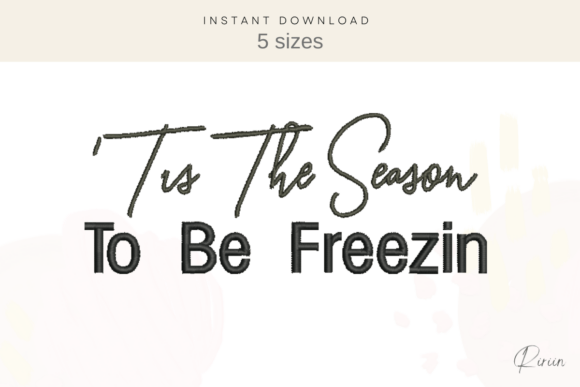
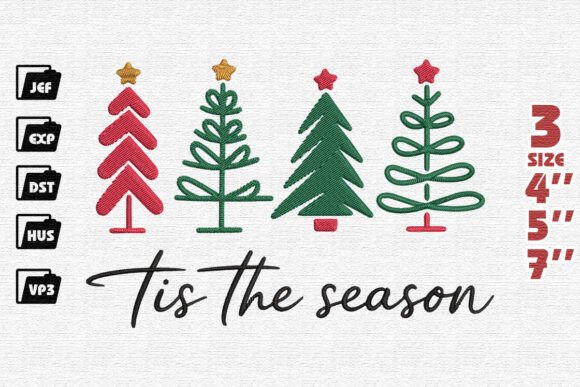
When I opened Tis the Season Holiday Embroidery, I didn’t see cluttered ornamentation or aggressive holiday cheer. Instead, I found clean outlines, balanced negative space, and a gentle rhythm in the lettering—like a handwritten note tucked into a mitten. It’s not overly ornate, but it’s unmistakably Christmas: soft curves, subtle flourishes, and that quiet confidence you only get from a well-considered machine embroidery design. It feels handmade without looking amateurish—exactly what my boutique clients expect on custom sweatshirts and linen tea towels.
Real-Life Test: That Tote Bag You’re Planning for Your Etsy Shop
Last week, I stitched Tis the Season Holiday Embroidery onto a natural canvas tote—medium-weight, unbleached, with light texture. I used medium tear-away stabilizer and tested thread colors first: deep forest green on the main motif, cream for the inner script. The result? Crisp satin stitch edges, no puckering, and fill stitch that held its shape even where the fabric dipped slightly over the seam. Customers who saw the mockup immediately said, “That’s the one I’d buy for my sister.” Not because it’s flashy—but because it feels intentional, warm, and gift-ready.
Where It Shines (and Where It Asks for Care)
Tis the Season Holiday Embroidery excels on stable, mid-weight fabrics: cotton twill aprons, fleece-lined baby blankets, structured pillow covers, and brushed cotton sweatshirts. Its moderate stitch density makes it forgiving on textured surfaces—no ghosting or skipped stitches on terry cloth towels or looped kitchen linens. As a personalized gift, it reads beautifully at 3.5–4 inches wide—ideal for left-chest placement on crewnecks or centered on a folded tea towel.
But here’s where attention matters: avoid stretching it too small. Below 2.75 inches, the inner script starts to compress—tiny lettering loses legibility, especially on dark fabric. On thin or stretchy knits (think lightweight tees or ribbed baby onesies), add cutaway stabilizer underneath and reduce top tension slightly. And while it works on caps, test hoop clearance first—the design’s width may require repositioning or a smaller scale to avoid distortion on curved crowns.
Design Personality Meets Practical Use
This isn’t a generic “Merry Christmas” stamp. Tis the Season Holiday Embroidery carries tone. It leans traditional but not dated, joyful but not cloying. That makes it unusually versatile across audiences: nursery decor (paired with soft muslin and muted thread), small shop merchandise (embroidered patches sewn onto denim jackets), or wedding guest gifts (stitched onto linen napkins with gold thread). For Etsy sellers, it’s a strong candidate for bundled digital embroidery file listings—especially when paired with printable mockups showing light/dark fabric variations.
What It Does for Your Finished Product
Stitching Tis the Season Holiday Embroidery elevates perceived value—not through complexity, but through cohesion. The spacing between elements feels deliberate; the curve of the “S” in “Season” mirrors the arc of a wreath. That kind of subtlety builds customer trust. When buyers see consistent line weight and smooth transitions between satin and fill stitch, they assume care went into the whole process—not just the stitching, but the sourcing, the stabilizing, the color pairing. That translates directly to repeat orders, better reviews, and stronger brand consistency for your craft business.
Designer Notes You’ll Actually Use
- Always test on scrap fabric first—especially if using textured or dark material. Thread contrast changes everything.
- Check stitch density visually before hooping. Dense areas should look rich, not muddy. If fills appear heavy, consider reducing density by 5–8% in your software.
- Confirm hoop size compatibility. This design fits comfortably in a 4x4 hoop at standard scale—but verify before sending to multi-needle machines.
- Inspect small details in black-and-white mockups. What reads as charming in color might vanish on charcoal fleece.
- Use proper stabilizer for your base fabric: tear-away for stable wovens, cutaway for knits, and water-soluble for delicate layers like organza overlays.
- Review licensing terms carefully before selling finished items or bundling the embroidery file commercially. Some versions allow small-batch production; others restrict resale of digital files entirely.
Final Thought: It’s Not Just Holiday Embroidery—It’s a Story Starter
I’ve stitched dozens of holiday designs this season—and most fade into background noise after the tree comes down. Tis the Season Holiday Embroidery doesn’t do that. It holds up. Whether stitched on a baby’s organic cotton bib or a linen market bag for your small shop, it invites pause. It says “handmade with thought,” not “mass-produced for December.” That quiet strength is rare. Use it where warmth matters more than wow—and where your customers remember how something felt, long after they’ve unwrapped it.