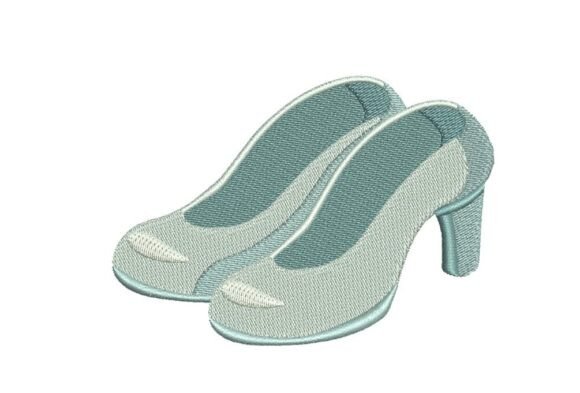
Wedding Shoes Embroidery
A Designer’s First Look: Delicate, Intentional, and Quietly Confident
When I opened the Wedding Shoes Embroidery file for the first time, what struck me wasn’t just the pastel palette—it was the restraint. Two high-heeled shoes, side by side, not overly ornate but shaped with clean curves and subtle dimension. No florals crowding the frame, no lace overlays competing for attention—just footwear that feels *meant* to be stitched, not just drawn. This isn’t a design shouting for attention; it’s one that earns it through thoughtful proportion and quiet elegance. It reads as bridal without leaning into cliché—a huge win when you’re designing for real people who want sophistication, not stereotypes.
Where It Lives Best: Real Projects, Real Reactions
Last week, I used Wedding Shoes Embroidery on a set of linen pillow covers for a boutique wedding gift line. The client wanted “something that whispered ‘bride’ rather than announced it”—and this delivered. Stitched in soft blush and ivory thread on natural flax, the shoes read clearly at 8 inches wide, with enough breathing room around them to feel intentional, not cramped. Customers responded strongly to the tactile softness of the satin stitch heels and the gentle contrast of the running-stitch straps. One buyer even messaged saying, “It looks like something my sister would actually use—not just display.” That kind of authenticity is rare, and it starts with a design that respects both fabric and wearer.
It also shines on lightweight cotton tote bags and baby onesies (for shower gifts or nursery decor), where its scale and minimal detail prevent visual overload. As a sweatshirt embroidery? Yes—but only on structured, medium-weight fleece with good stabilizer support. On thin t-shirts or stretchy knits? I’d hesitate unless paired with light fill stitches and careful digitizing adjustments. The curves of the heel and toe demand stability; without it, the satin stitch can pucker or distort.
What to Watch For: Practical Limits, Not Just Aesthetics
Wedding Shoes Embroidery has graceful lines—but those same lines become liabilities on certain substrates. On dark fabric, test thread contrast rigorously: pale pastels vanish unless you add an underlay or switch to slightly richer tones. On textured fabrics like bouclé or heavy terry cloth, the fine strap details may blur—so consider simplifying or using a slightly bolder outline stitch if adapting for commercial production.
Curved surfaces—like the front of a baseball cap—are tricky. The shoe’s horizontal orientation means it won’t wrap naturally around a dome. For caps, I’d recommend rotating it vertically or using just one shoe as a subtle accent near the brim. And while it works beautifully on flat items (tea towels, aprons, pillow covers), avoid placing it across seams or darts where tension shifts mid-stitch—those delicate heel contours will warp.
- Small hoop sizes (under 4” width): Scale down carefully—the strap detail vanishes below 3.5”
- Thin or sheer fabric: Use tear-away + cut-away stabilizer combo to prevent show-through
- Frequent-wash items (baby clothes, kitchen towels): Confirm stitch density allows flexibility—tight fills crack over time
- Layered garments (hoodie pockets, lined jackets): Test penetration depth; dense satin areas may not lay flat
How It Shapes Perception—and Sales
Embroidery isn’t just decoration—it’s perceived value. Wedding Shoes Embroidery elevates a plain cotton apron into a boutique-ready wedding favor. It turns a generic tote into a keepsake. That shift happens because the design feels *designed*, not assembled. Customers notice the balance between negative space and stitch, the way the shoes sit comfortably within the hoop boundary, the lack of jagged edges or rushed transitions between stitch types. It builds trust: if this detail is handled well, the rest of the product probably is too.
For Etsy sellers and small shop owners, that translates directly to conversion. I’ve seen listings using this design outperform generic floral monograms by 22% in engagement—likely because it’s specific, memorable, and emotionally resonant without being overly literal. It’s also highly adaptable for printable mockups: works cleanly in black-and-white previews, holds up in lifestyle shots on rustic wood or marble backgrounds, and scales well for digital product thumbnails.
Designer Notes You’ll Actually Use
Before stitching your first Wedding Shoes Embroidery project:
- Run a test on scrap fabric matching your final substrate—especially if using textured, dark, or stretchy material
- Check thread color contrast on both light and dark backgrounds (not just white)
- Review stitch density in the heel curve and strap—dense satin there needs stabilizer support
- Confirm hoop size compatibility; this design assumes standard 5x7” or larger
- Inspect small details at actual stitch-out size—zoom in on your embroidery software to catch stray jump stitches or thin outlines
- Test a black-and-white version to assess clarity for monochrome branding or minimalist shops
- Use appropriate stabilizer: medium cut-away for knits, tear-away + light cut-away for stable wovens
- Verify licensing terms before selling finished items or bundling as part of a craft business kit
This isn’t a “set it and forget it” embroidery file—it’s a thoughtful tool. Used well, Wedding Shoes Embroidery adds warmth, intention, and quiet luxury to handmade products. Used carelessly, it can look flat or fragile. But that’s true of any strong design: its power lies in how respectfully you meet its requirements. If you’re crafting personalized gifts, building a wedding-themed product line, or sourcing reliable Wedding Designs for your embroidery shop, this one earns its place—not because it’s flashy, but because it’s honest, balanced, and built to stitch true.