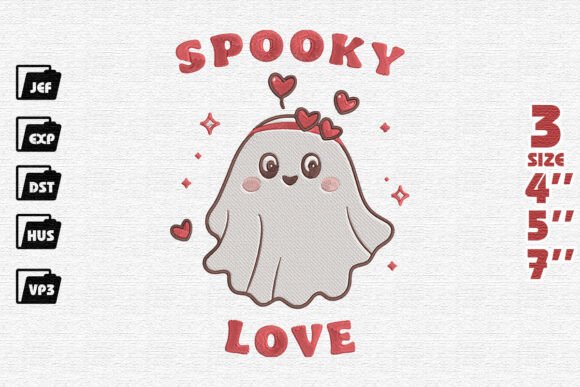
Sweetheart Ghost Embroidery Pattern
First Impression: Soft, Sweet, and Unexpectedly Marketable
As an embroidery designer who’s prepped over 200 craft fair booths—and watched what flies off the table versus what sits folded in a basket—I took one look at Sweetheart Ghost Embroidery Pattern and smiled. It’s not spooky. It’s not edgy. It’s tender, gently whimsical, and quietly confident—like a lullaby with a wink. The title alone tells a story: “Sweetheart” signals warmth and affection; “Ghost” adds gentle playfulness without leaning into Halloween kitsch. This isn’t farmhouse or rustic—it’s soft modern. Not minimalist, but intentionally uncluttered. And for Valentine’s Day? It sidesteps cliché hearts and Cupid arrows in favor of something more memorable: emotional resonance with quiet charm.
Where It Shines on Craft Fair Products
In my booth setup—featuring embroidered tote bags, aprons, tea towels, patches, fabric pouches, pillow covers, and small market bags—the Sweetheart Ghost Embroidery Pattern stands out strongest when used as a focused accent, not a full-cover motif. On a natural linen tea towel? Perfect. Centered just below the hem, it reads clearly from three feet away—soft but legible, delicate but distinct. On a cotton tote bag? Best placed on the lower corner or centered on the front panel at 3.5–4 inches wide. Too large loses its tenderness; too small disappears against texture.
For aprons, I’d place it above the pocket—not on the bib—so it stays visible while the wearer moves. On baby onesies (per the product description), it works beautifully on the chest or left shoulder, especially in pale pinks, mint, or oatmeal. As an embroidered patch? Excellent. Its clean silhouette and balanced negative space hold up well when cut, fused, and sewn onto denim jackets or backpacks. Pillow covers benefit most when the ghost is stitched on a solid-color front panel—no busy prints competing for attention.
What Makes It Sell—And What Makes It Stumble
This design sells because it feels handmade *and* intentional. Customers don’t see “cute”—they feel “thoughtful.” At craft fairs, that translates to longer dwell time, more questions, and higher perceived value. It photographs exceptionally well for Etsy listings: soft shadows, subtle stitch texture, and gentle curves read clearly even in natural light. As a digital embroidery file, it’s highly repeatable for batch production—no intricate lettering, no micro-details that fray or blur.
But caution points matter. The heart-shaped “body” of the ghost carries moderate stitch density—fine on stable cotton or linen, but potentially puckering on stretchy knits like baby jersey unless stabilized properly. Avoid dense terry cloth towels unless you use cutaway stabilizer and reduce top thread tension. On curved surfaces—like the front of a baseball cap—the ghost’s rounded shape adapts better than angular designs, but test first: the bottom curve may distort if hooped too tightly.
Dark fabrics demand high-contrast thread colors—think blush pink thread on charcoal, or ivory on navy—to preserve its softness without sacrificing visibility. And while it scales down nicely to 2.25 inches for patches or pouches, going smaller than 1.75 inches risks losing definition in the heart outline and subtle “smile” curve.
Design Practicality for Small Shop Owners & Etsy Sellers
If you’re an Etsy seller or small shop owner juggling inventory, mockups, and time, this machine embroidery design is low-friction. It doesn’t require specialty threads or metallics to land. Standard 40-weight polyester or cotton works beautifully across fabric types. You’ll want to confirm hoop size compatibility before cutting—most versions fit comfortably in a 4x4 or 5x7 hoop, making it accessible for beginners and pros alike.
For printable mockups? It renders cleanly in PNG and JPEG previews—ideal for cohesive listing bundles (e.g., “Valentine’s Day Baby Bundle” with matching onesie, blanket, and wall art). As design assets go, it’s versatile enough to support seasonal collections without feeling dated—pair it with botanical accents in spring or neutral linens year-round.
Real-World Designer Notes Before You Stitch
- Always test on scrap fabric—especially if using textured tea towels or baby knit. Watch for skipped stitches around the heart’s inner curve.
- Check thread contrast early. A pale ghost on ecru linen reads softly; the same on heather gray may vanish.
- Review spacing between elements. The ghost’s floating posture relies on balanced negative space—crowding it with text or borders weakens its charm.
- Confirm stabilizer type. Tear-away works for stable wovens; cutaway is safer for knits and terrycloth.
- Create at least one real mockup—not just digital—before ordering labels or packaging. Seeing it stitched on your actual tote fabric changes everything.
- Compare fabric colors side-by-side. That “blush” thread looks warm on ivory but cool on oatmeal—small shifts impact mood.
- Verify commercial licensing before selling finished products. This digital embroidery file must be cleared for resale of physical goods—don’t assume.
Why It Belongs in Your Booth—Not Just Your Folder
The Sweetheart Ghost Embroidery Pattern strengthens booth display by offering emotional contrast. While many vendors lean into bold typography or maximalist florals, this design whispers instead of shouts—and that makes it unforgettable in a crowded aisle. It invites touch, sparks conversation (“Is it for babies? For Valentine’s? For ghosts who fell in love?”), and supports brand consistency if you specialize in gentle, gender-neutral, or heirloom-style handmade products.
It elevates a simple tea towel into a heartfelt gift. It turns a plain pouch into a keepsake. It gives your craft fair product line depth—not just variety. And for creative entrepreneurs building a recognizable aesthetic? It’s a quiet signature piece: tender, timeless, and thoughtfully stitched.