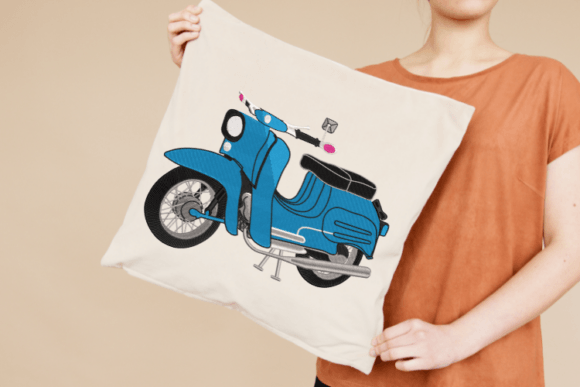
Vespa Digital Embroidery Design
First Impression: Retro Charm, Instant Recognition
As an embroidery designer who’s prepped over 200 craft fair booths, I can tell you—Vespa Digital Embroidery Design lands with quiet confidence. It’s not loud or cartoonish; it’s bold yet elegant, retro but modern, and instantly evokes wanderlust, Italian summers, and handmade authenticity. That “vintage travel” hook in the description isn’t fluff—it’s the emotional core customers respond to at markets. On a crowded table full of florals and quotes, this design stands out because it tells a story without words. It feels premium, not mass-produced, and aligns perfectly with the curated aesthetic of today’s handmade shopper.
Where It Shines: Craft Fair Product Pairings
In my booth setup—tote bags, aprons, tea towels, embroidered patches, canvas pouches, and pillow covers—the Vespa Digital Embroidery Design consistently draws double-takes on three items:
- Tote bag design: Centered on a natural canvas tote (10"–12" wide), it reads clearly from six feet away. The scooter’s silhouette is strong enough to hold scale without losing detail.
- Embroidered patch: Sized at 3.5"–4", it becomes a collectible—ideal for pinning on denim jackets or stitching onto market bags. Customers love taking home a wearable piece of nostalgia.
- Apron embroidery: Positioned just above the pocket on a linen-cotton blend, it adds personality without overwhelming the garment. It signals craftsmanship—not decoration.
It also works beautifully on tea towel embroidery (especially on off-white or oatmeal linen), small fabric pouches, and structured caps—but with caveats (more on those below). As a machine embroidery design, it avoids fussy fill areas that bog down production, making it ideal for batch runs before a weekend market.
What Buyers Notice—And Why They Reach Out
This isn’t just about cuteness. At craft fairs, shoppers scan fast. The Vespa Digital Embroidery Design wins because it’s:
• Immediately legible as transportation—and specifically *iconic* transportation;
• Emotionally resonant for travelers, vintage lovers, and design-savvy millennials;
• Visually balanced: clean lines, open negative space, and a shape that anchors rather than clutters.
That means better booth dwell time, more photo requests (“Is this your design?”), and higher perceived value—even on modestly priced items like tea towels or patches.
Production Reality Check: What Works (and What Needs Care)
Yes, this is a strong digital embroidery file, but execution matters. Here’s what I test before committing to 50 units:
- Stitch density: Moderate—not overly dense, but detailed enough to read on medium-weight fabrics. Avoid heavy stabilizer layers unless embroidering on textured towels or thick canvas.
- Small details: The Vespa’s headlight and handlebars are crisp, but shrink below 2.75". Don’t use it under 2.5" on caps or tiny pouches—it loses definition.
- Fabric texture: Performs best on smooth-to-medium weaves (linen-cotton, quilting cotton, twill). On highly textured tea towels or bouclé, reduce density slightly and use tear-away + light cutaway stabilizer.
- Dark fabric: Requires high-contrast thread colors. Test white or cream thread on navy or charcoal—avoid pastels unless backing is very light.
- Curved surfaces: On caps, center the design on the front panel and avoid stretching the hoop too tightly—this design flows well with gentle curvature if hooped carefully.
Visual & Commercial Impact: Beyond the Stitch
For Etsy sellers and small shop owners, the Vespa Digital Embroidery Design strengthens brand consistency. It’s versatile enough to anchor a “Travel & Terrain” collection alongside compass motifs or map prints—but distinct enough to stand alone. In printable mockups, it photographs cleanly—no fuzzy edges or thread bleed—making listings look professional and cohesive. And unlike trend-driven graphics, it feels timeless: no need to rotate it seasonally. That repeatability supports long-term inventory planning and cross-promotion (e.g., matching tote + pouch + patch sets).
Designer Notes You Can’t Skip
Before cutting fabric or listing on Etsy, do these six things:
- Test the embroidery file on scrap fabric matching your final product—same weight, same dye lot.
- Check thread contrast: print a swatch, hold it at arm’s length, and ask someone else, “What do you see first?”
- Review spacing between elements—especially around the Vespa’s wheels and frame—to ensure no floating stitches or awkward gaps.
- Confirm hoop size compatibility with your machine and intended product (e.g., cap frames vs. standard hoops).
- Inspect stitch density in tight curves—adjust tension or digitizing settings if threads pucker or skip.
- Verify commercial licensing: this is essential for selling finished products, especially as a digital seller or wholesale boutique maker.
Also—make at least one real mockup. Not digital. Not printed. Actual stitched fabric, photographed in natural light. That version sells more than ten polished mockups ever will.
Final Thought: A Smart Addition to Your Design Assets
The Vespa Digital Embroidery Design isn’t just another Transportation-themed machine embroidery design. It’s a conversation starter, a signature accent, and a reliable seller across categories—from kitchen textiles to wearable art. For craft fair sellers juggling time, cost, and visual impact, it delivers clarity, charm, and commercial readiness. When paired thoughtfully with fabric choice, thread palette, and smart placement, it transforms a simple tote bag into a handmade product with soul—and that’s exactly what moves units on Saturday afternoon.